


Stretch ceilings in Winnipeg
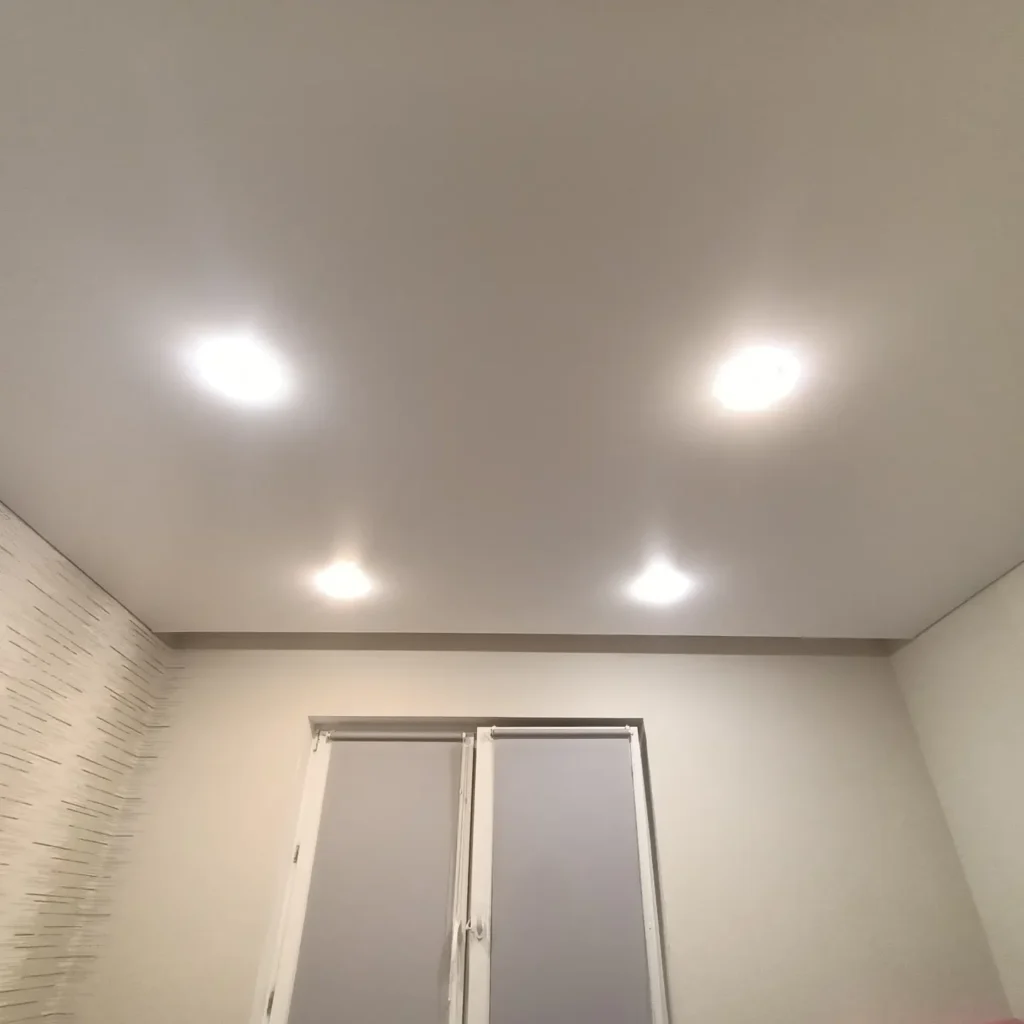
A clean, flat ceiling with the lighting built straight into it. A plain ceiling goes up in a day, a full lighting design in two or three. No drywall dust, no sanding, no week of plastic sheeting through your house.
What a stretch ceiling actually is
A stretch ceiling is a thin membrane fitted to a track that runs around the perimeter of the room, just below your existing ceiling. The membrane is tensioned until it is perfectly flat, and lights, vents and fixtures are set into it as part of the installation.
It is common across Europe and still rare in Winnipeg, which is exactly why most people here have never been offered it as an option. If your ceiling is cracked, textured, stained or simply uneven, this covers it properly instead of patching it again.
Why people choose it over drywall
- It is fast. A plain ceiling in one room takes a day. Two to three days if there are light lines and built-in lighting to wire and set. A drywall ceiling means boarding, taping, three rounds of mud, sanding and painting.
- It is clean. No drywall dust through the house, no furniture to seal off for a week.
- It is perfectly flat. The membrane is tensioned, so it does not follow the dips and sags of the structure above it.
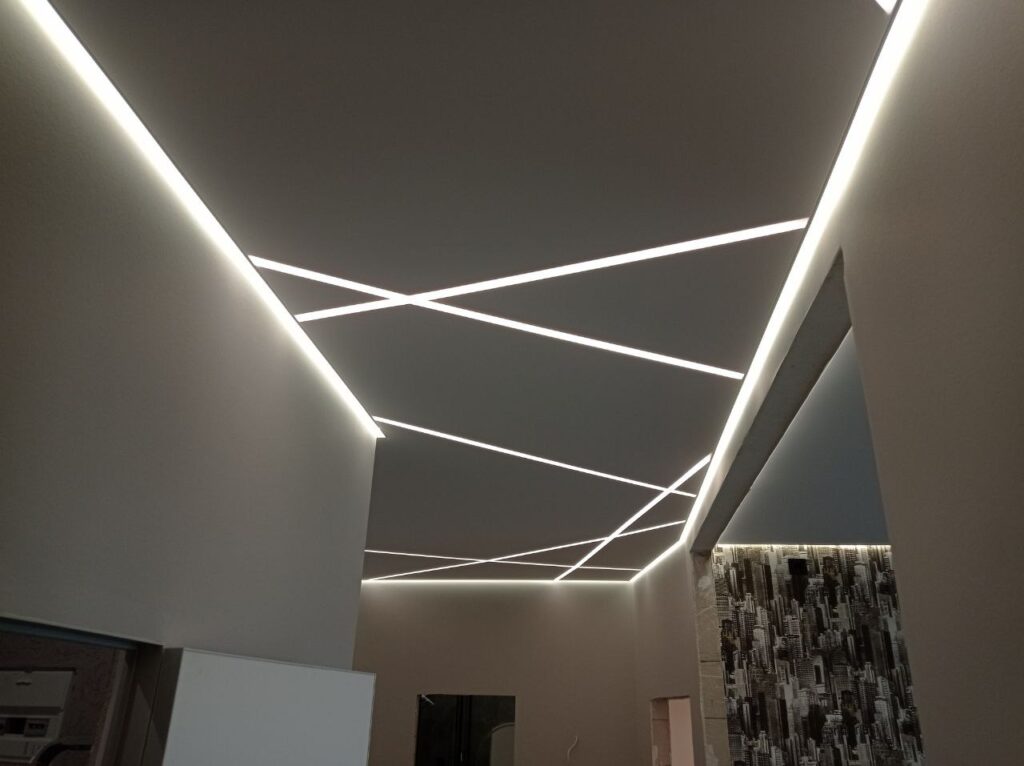
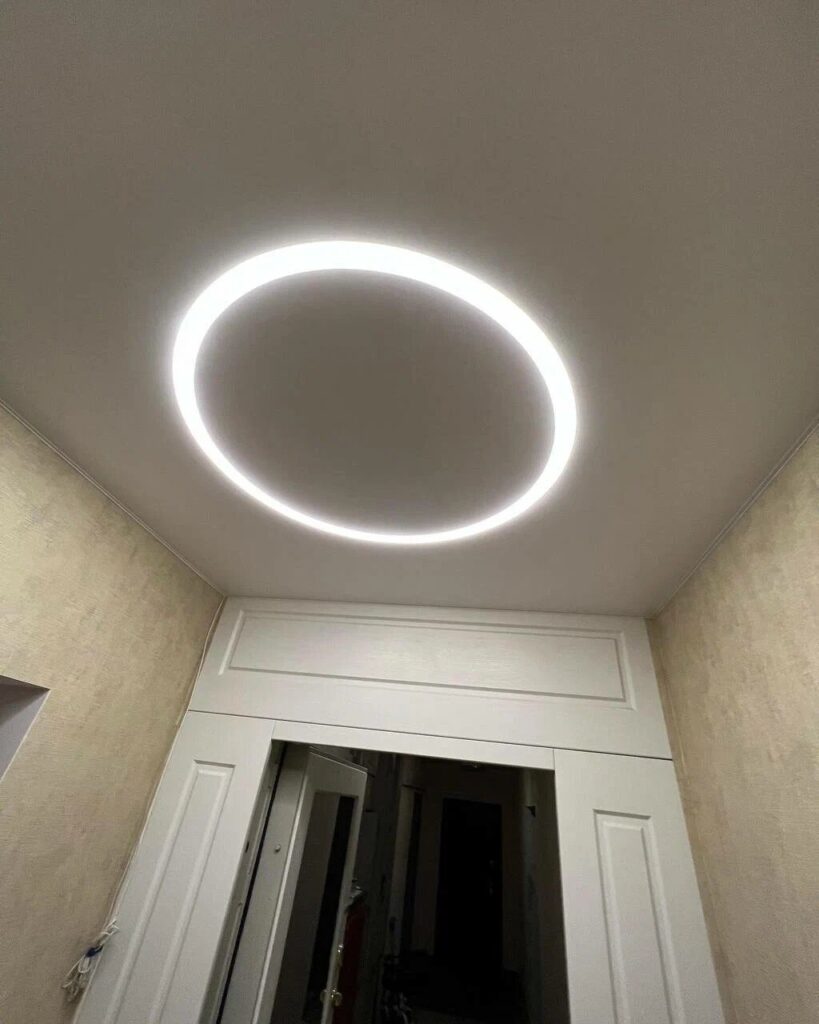
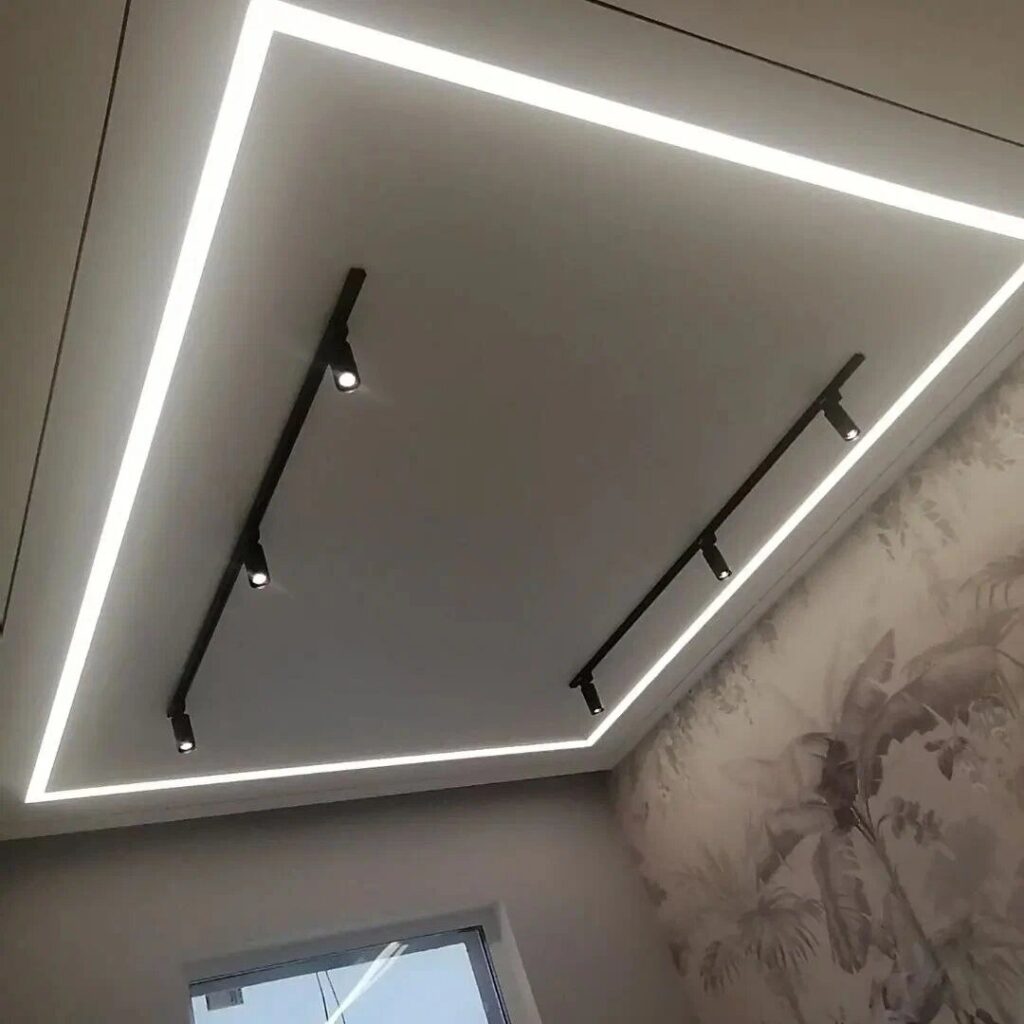
- The lighting is built in. Pot lights, light lines, perimeter glow and backlit panels are designed into the ceiling rather than cut into it afterwards.
- It hides what is above it. Pipes, wiring, ducts, old textured ceilings and water stains all disappear behind it.
- It handles water. If something leaks upstairs, the membrane holds the water instead of your drywall soaking it up.
Finishes
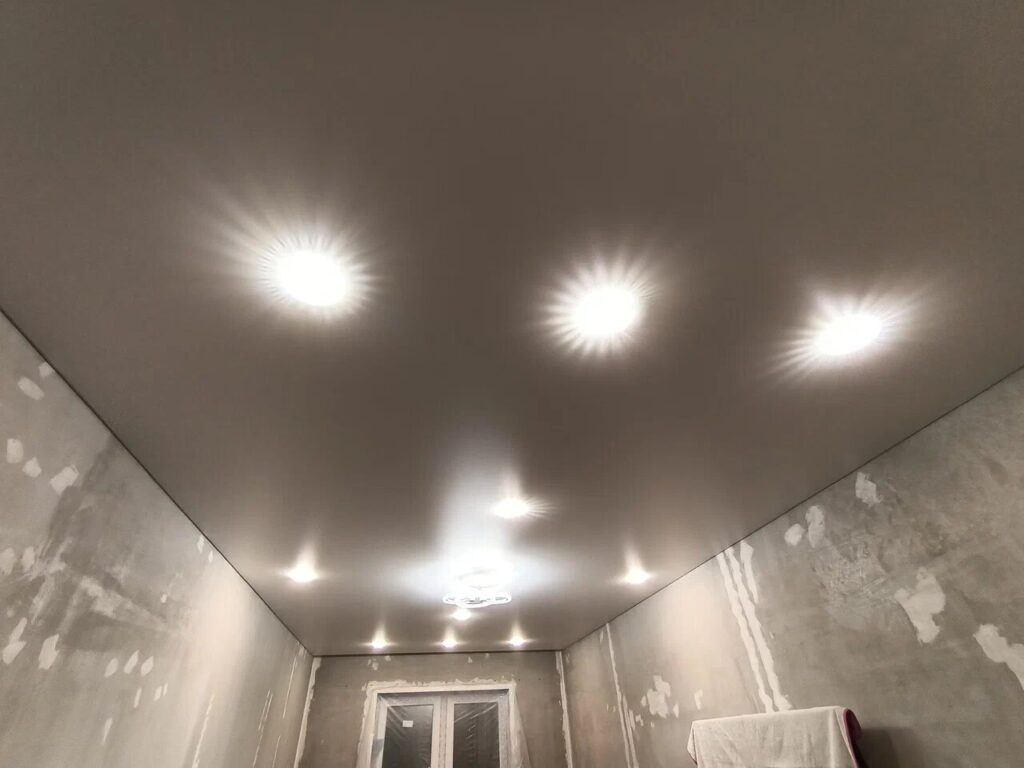
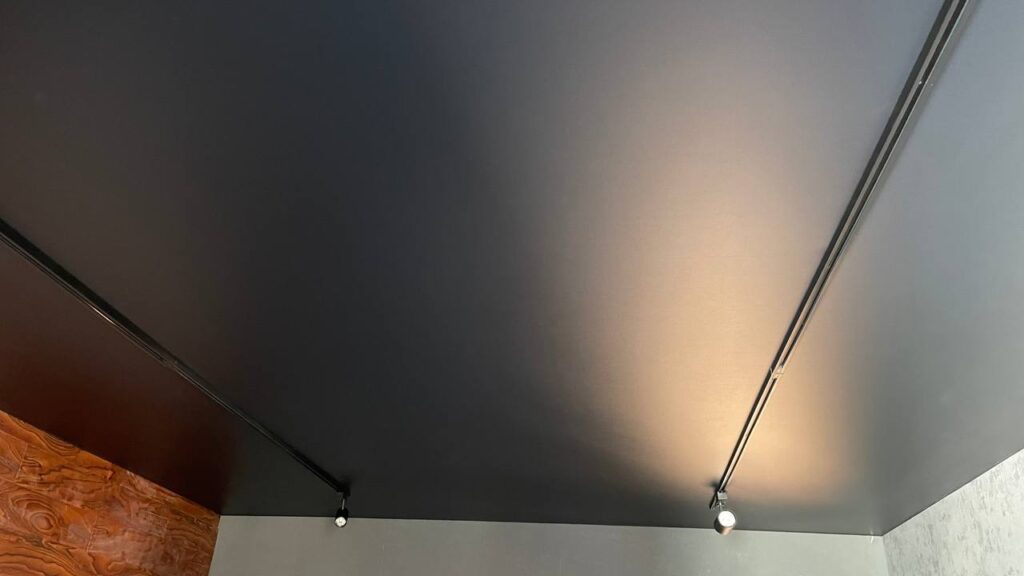
Matte
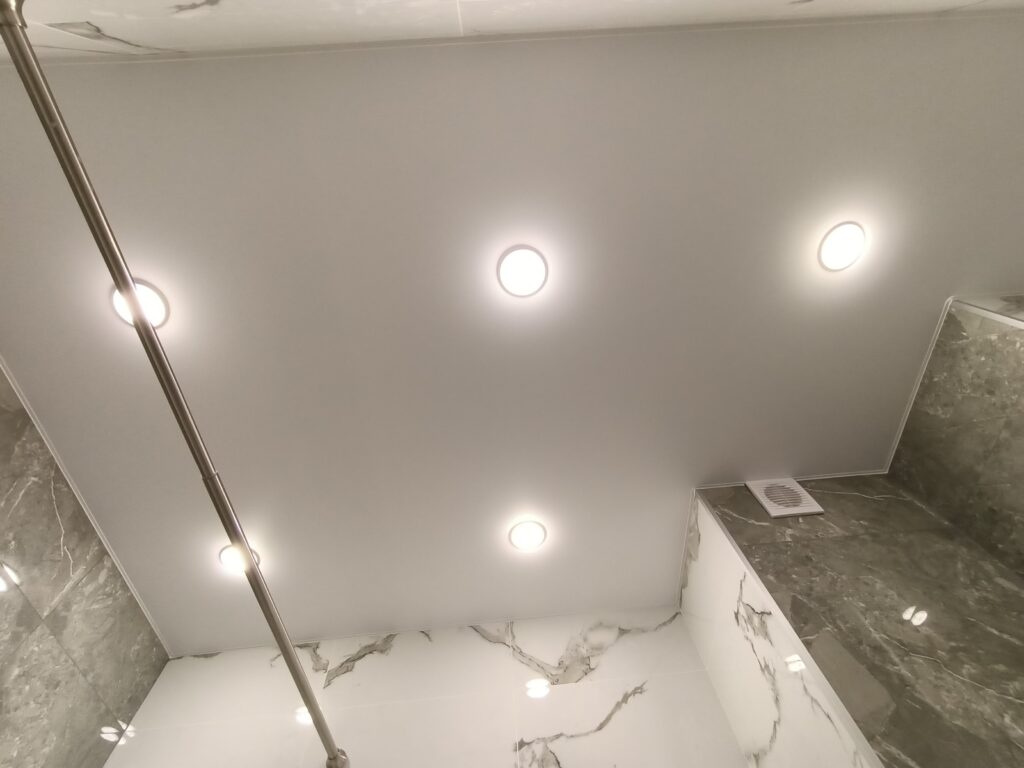
Looks like a perfectly painted ceiling, with no reflection. The safe choice for bedrooms, living rooms and anywhere you want the ceiling to simply disappear.
Gloss
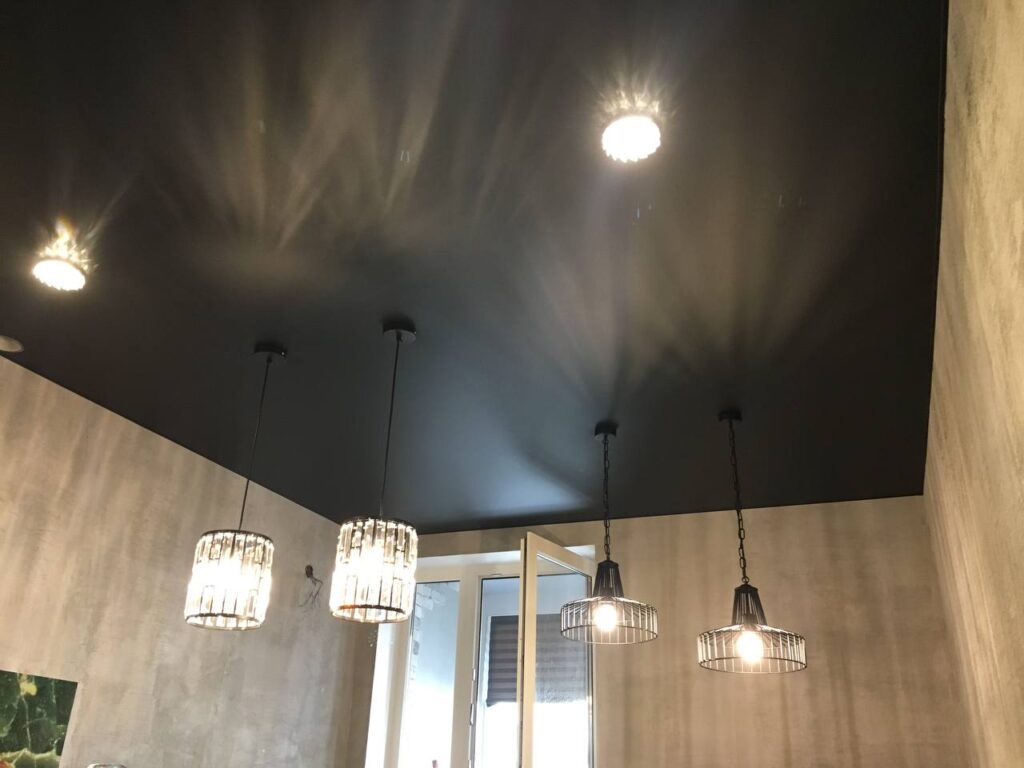
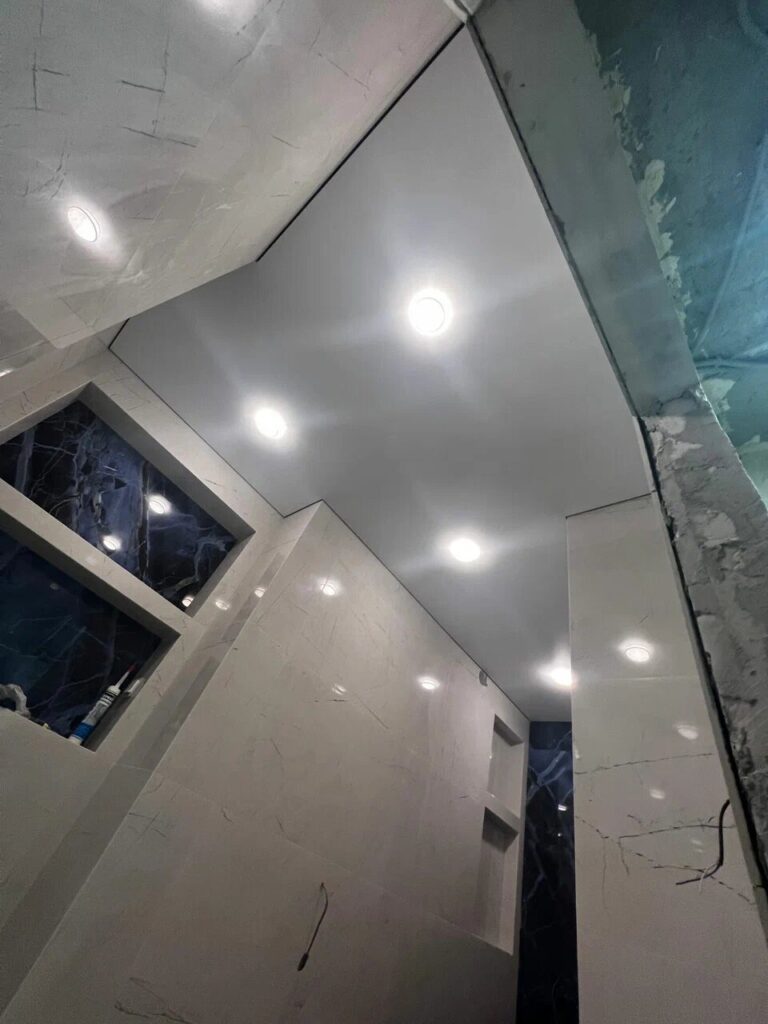
Reflective, almost mirror-like. It bounces light around and makes a low room feel considerably taller, which is useful in basements and smaller spaces. Dark gloss over a dining table is a statement.
Light lines
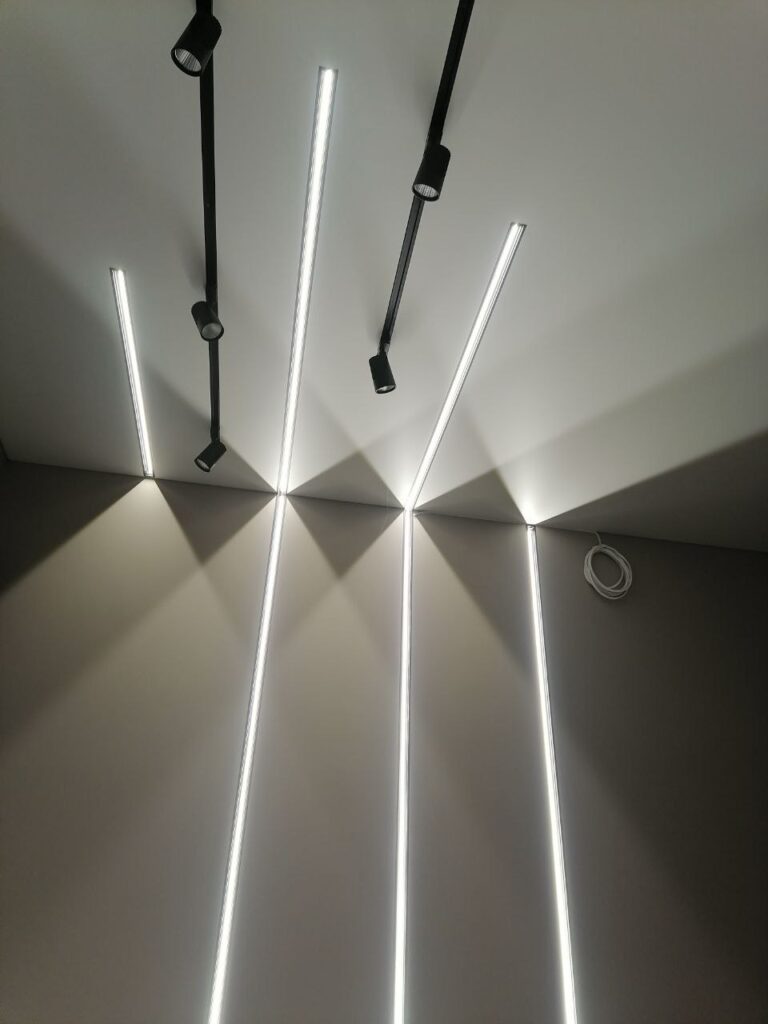
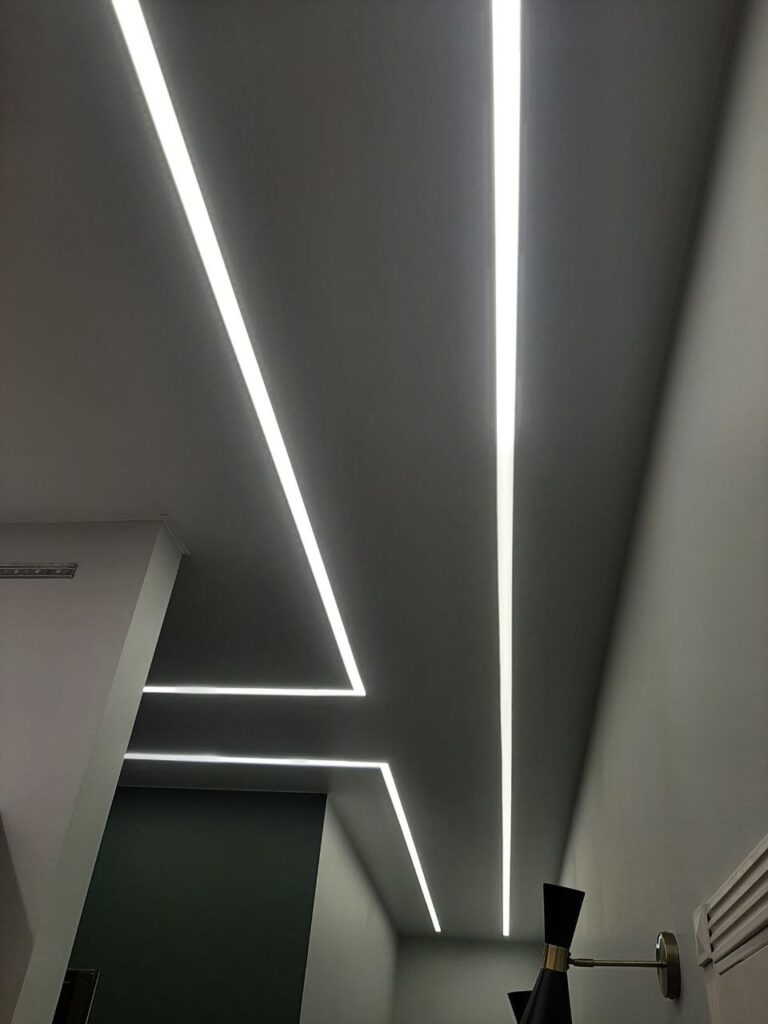
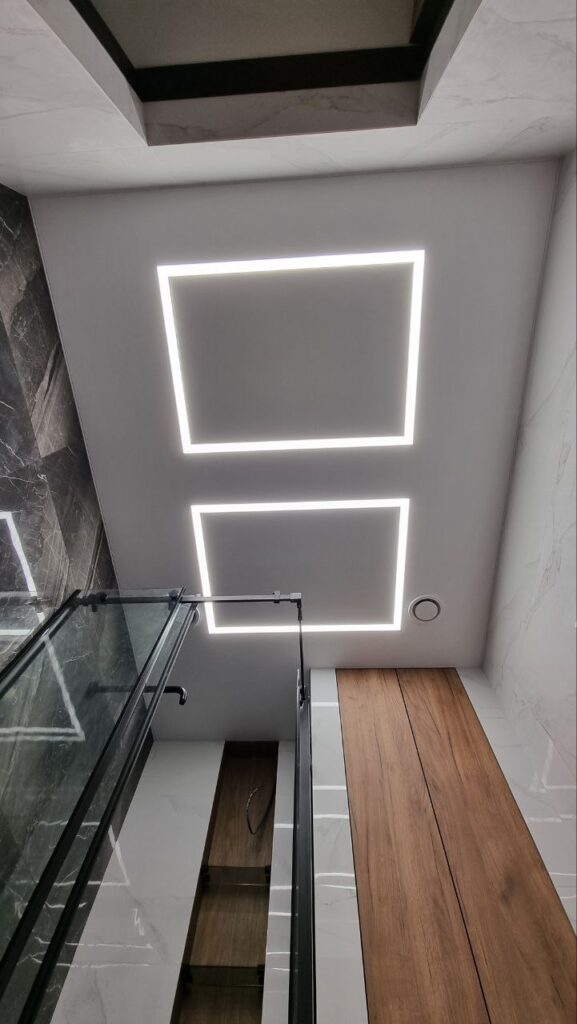
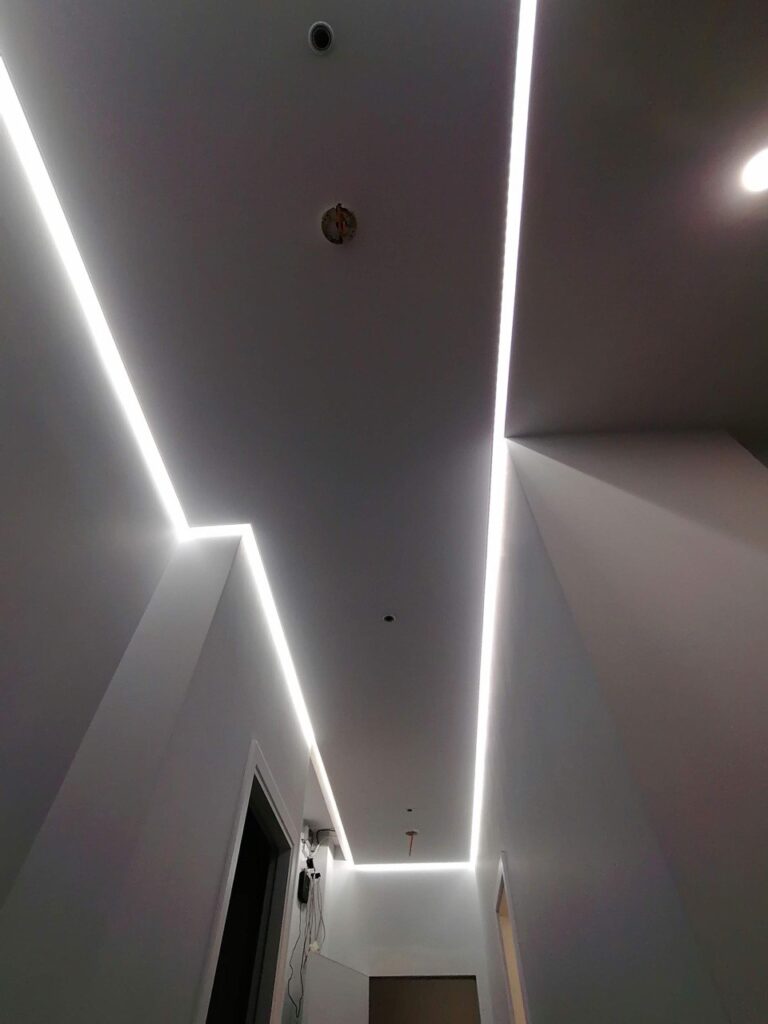
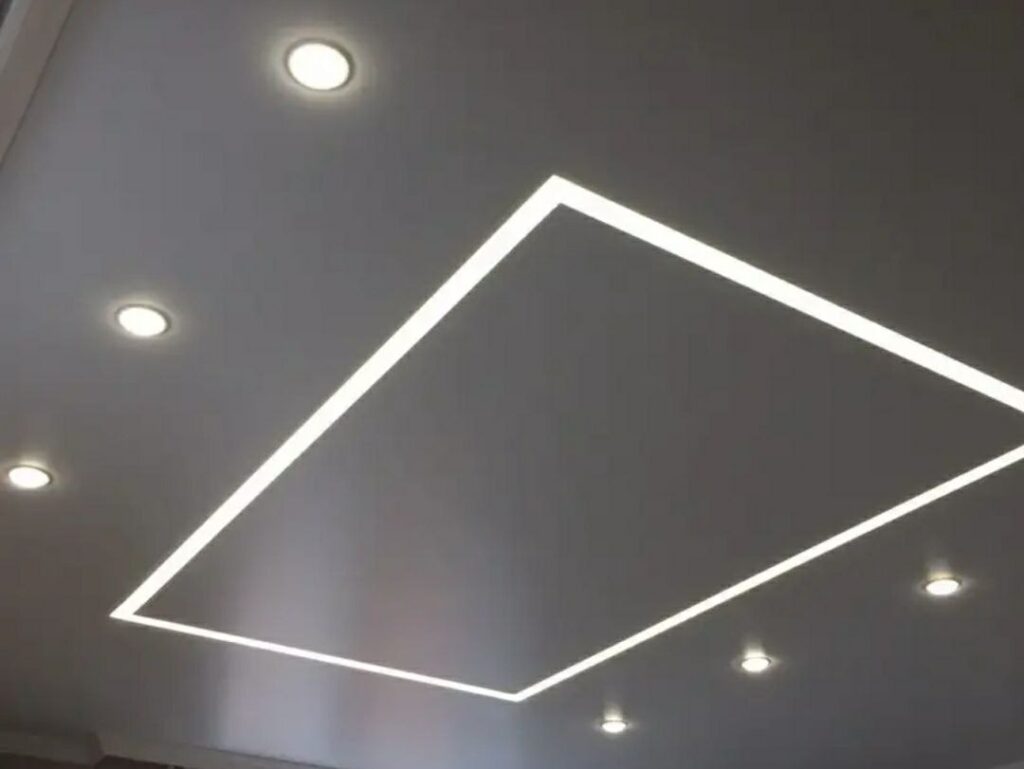
Continuous LED lines set into the ceiling itself: straight runs, rectangles, geometric patterns. This is the part people have usually never seen before, and it is where the ceiling stops being a surface and starts being the lighting design.
Perimeter and colour lighting
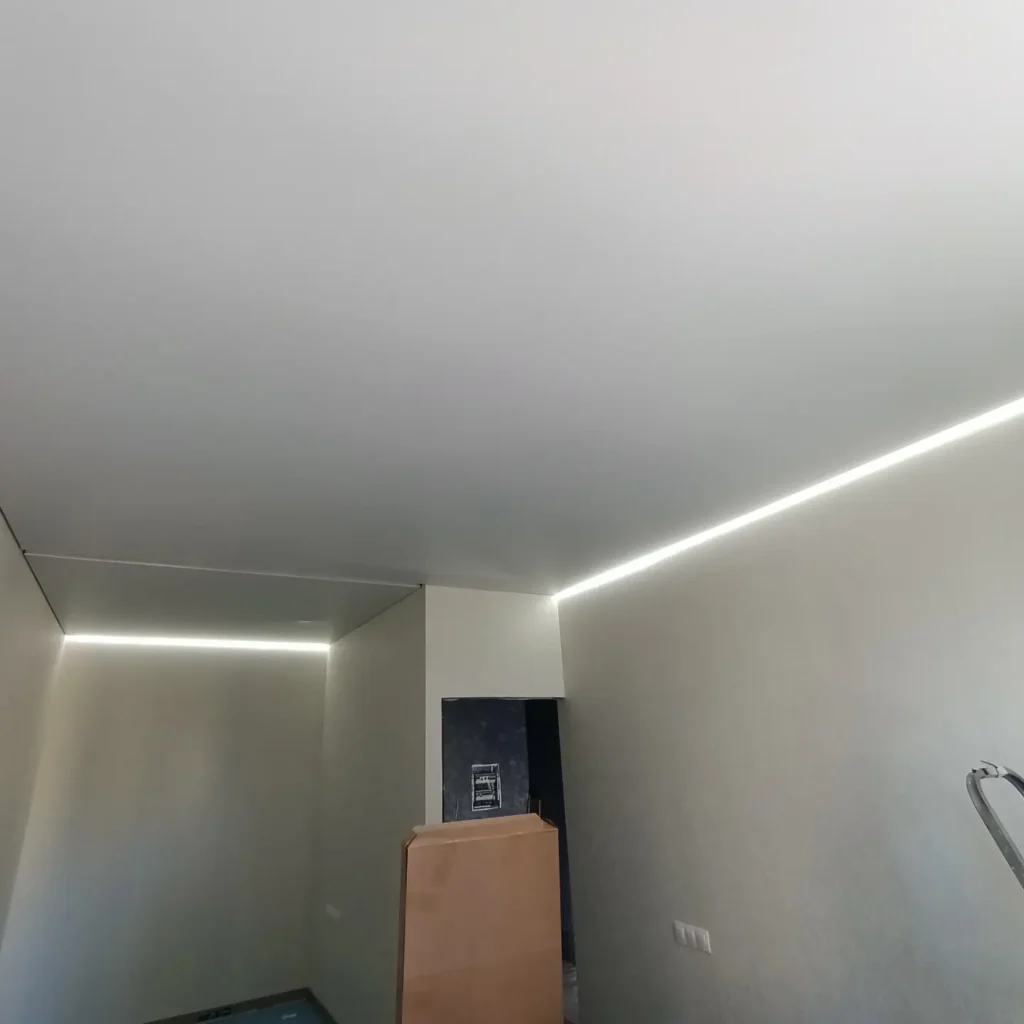
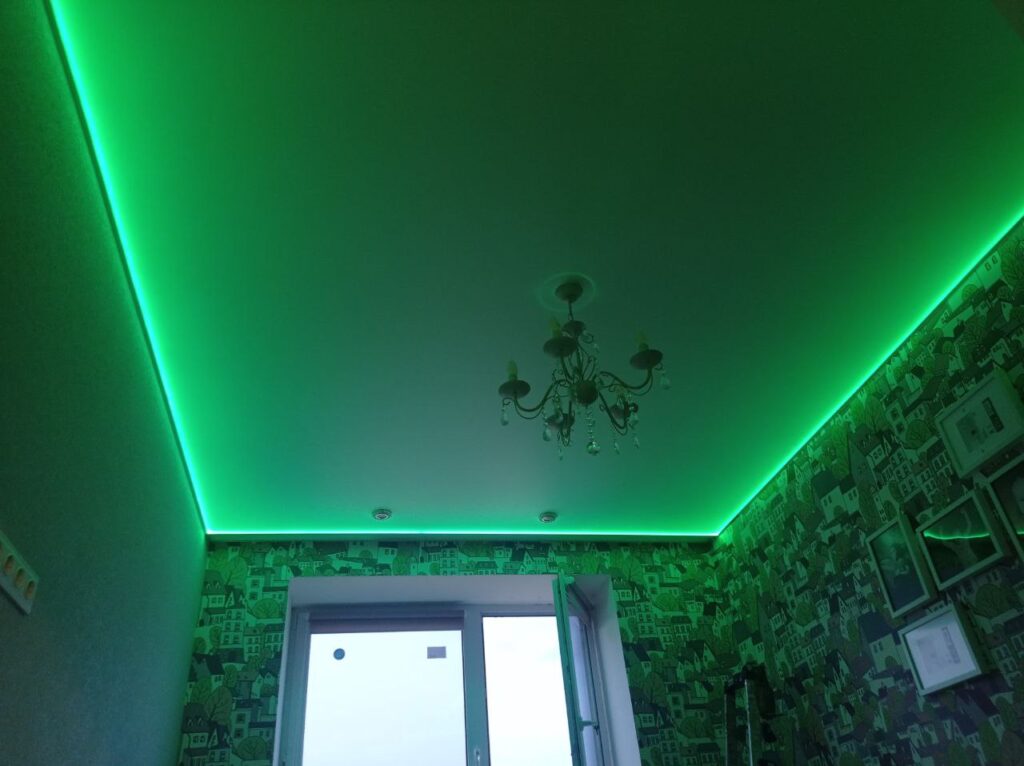
A hidden strip around the edge of the ceiling gives a soft glow with no visible fixture. Add colour-changing LED and the same room can be warm white for dinner and anything you like for a party.
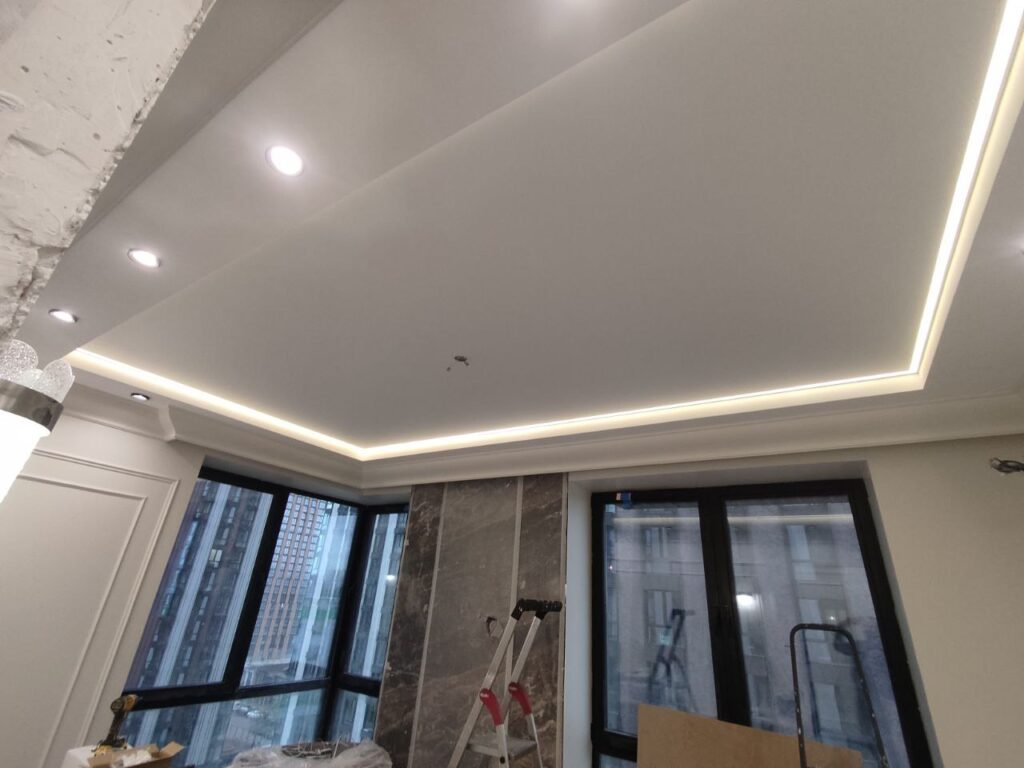
Where they work
Living rooms, bedrooms, kitchens, bathrooms, hallways, basements and commercial space. Basements are a particularly good fit: ceilings down there are usually low, full of pipes and ductwork, and a gloss membrane both hides the mechanicals and makes the room feel higher. Unusual shapes are not a problem either, including vaulted ceilings and rooms that are not square.
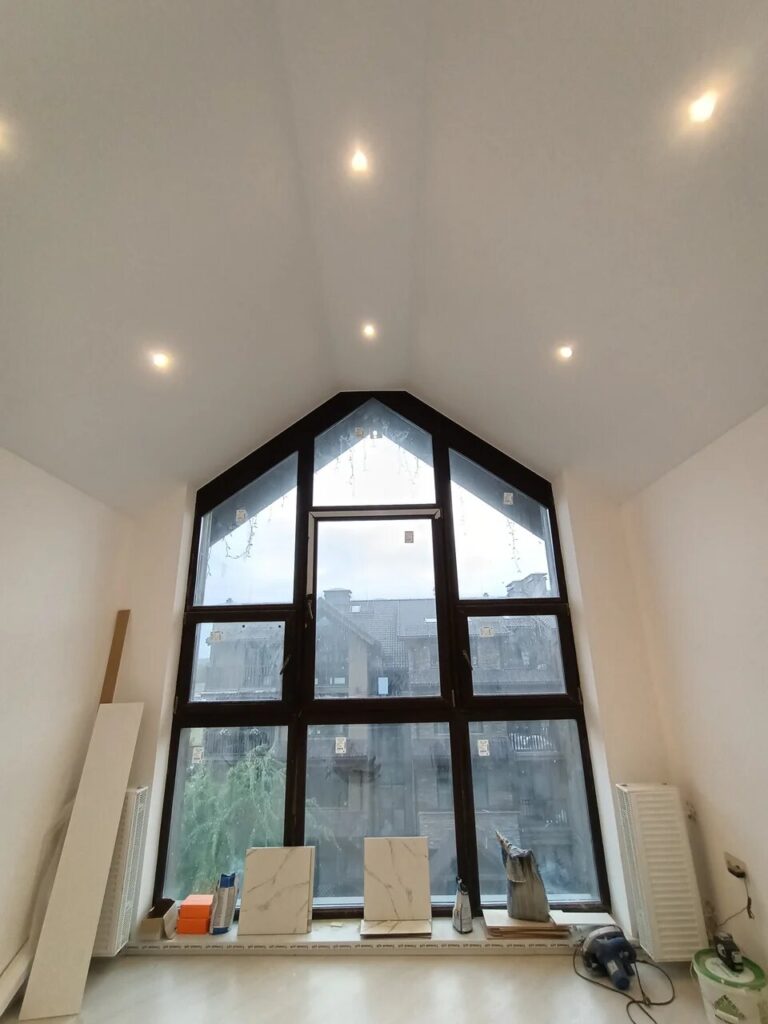
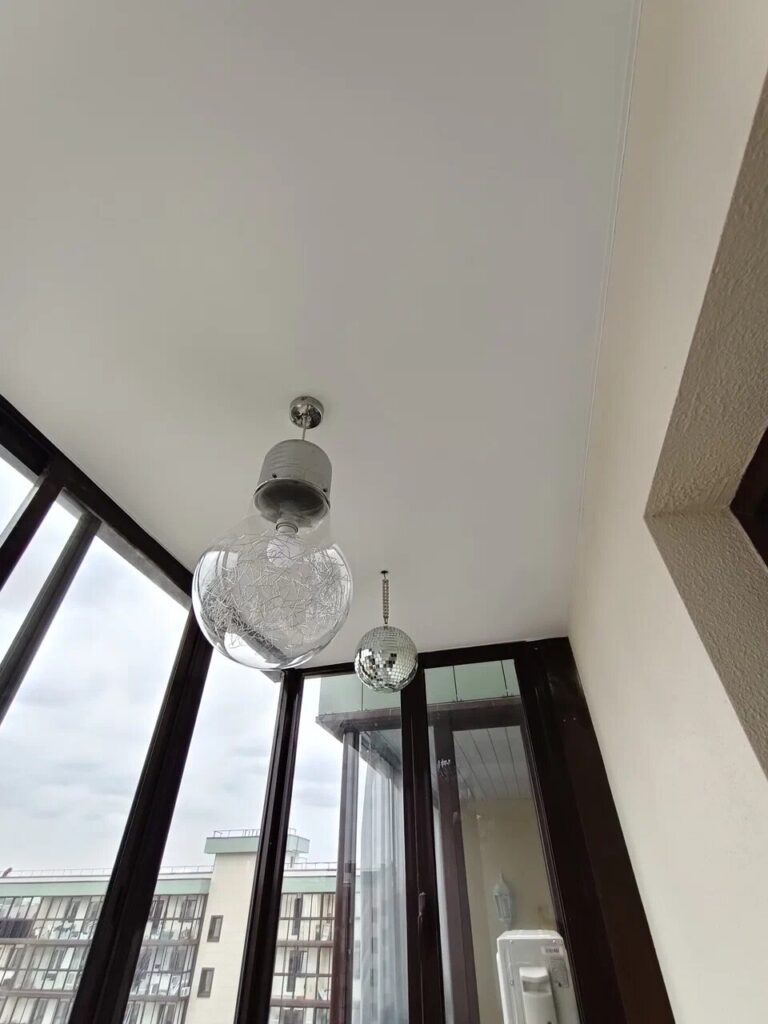
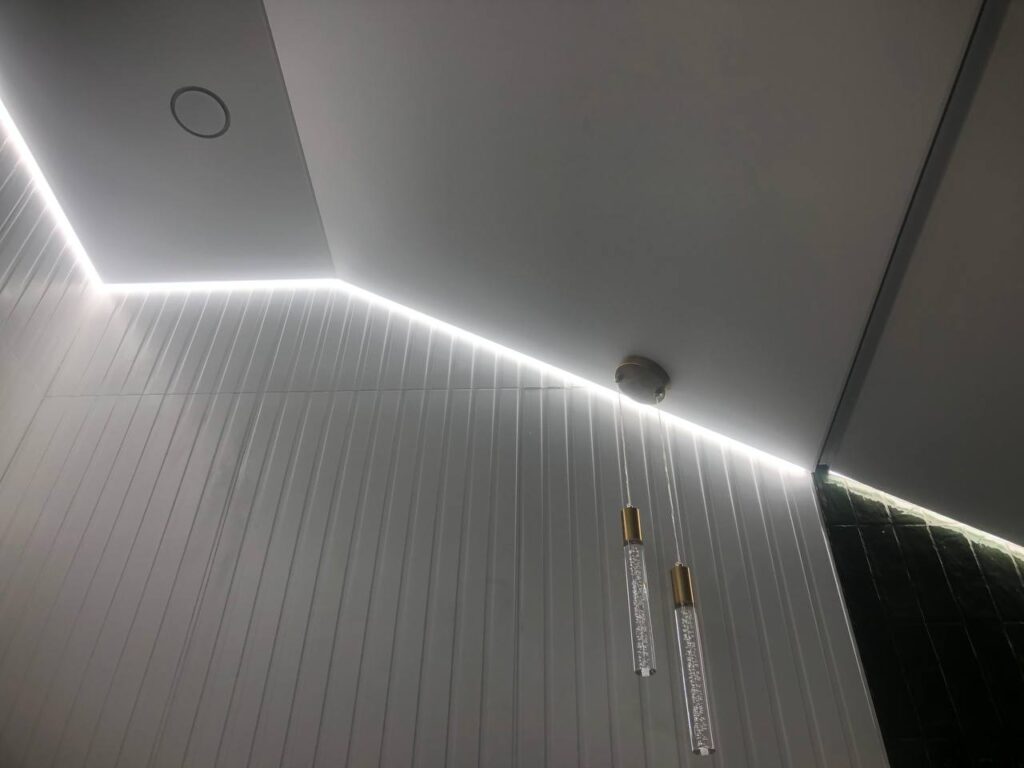
How the job runs
- Measure. We measure the room on site. Every membrane is made to the exact dimensions of your ceiling, so this cannot be done from a photo.
- Choose the finish and the lighting. Matte or gloss, colour, and where the light goes.
- Install. Track around the perimeter, wiring for the lights, then the membrane is heated and tensioned into place. A plain ceiling is a one-day job; with light lines and built-in fixtures, allow two to three days.
- Clean up. Furniture back, floor swept, done. No sanding, no dust.
Common questions
How much ceiling height do I lose? Usually a few centimetres, a little more if pot lights need clearance above the membrane.
Is it safe? The material we use is tested to Canadian standards for surface burning characteristics.
What if a pipe above it leaks? The membrane holds the water. We drain it and refit the ceiling, and you have not lost a drywall ceiling and the paint below it.
Can it be cleaned? Yes, with a damp cloth. Gloss finishes occasionally want a wipe to keep the reflection crisp.
What does it cost? It depends on the size of the room, the finish and how much lighting is built in. Tell us the room dimensions and what you have in mind and we will give you a number.
You can also work out the membrane area yourself with our ceiling calculator.